
Mao’s Last Dancer’s Li Cunxin on coming to Australia, cultural identity, and the new sequel to his international bestseller
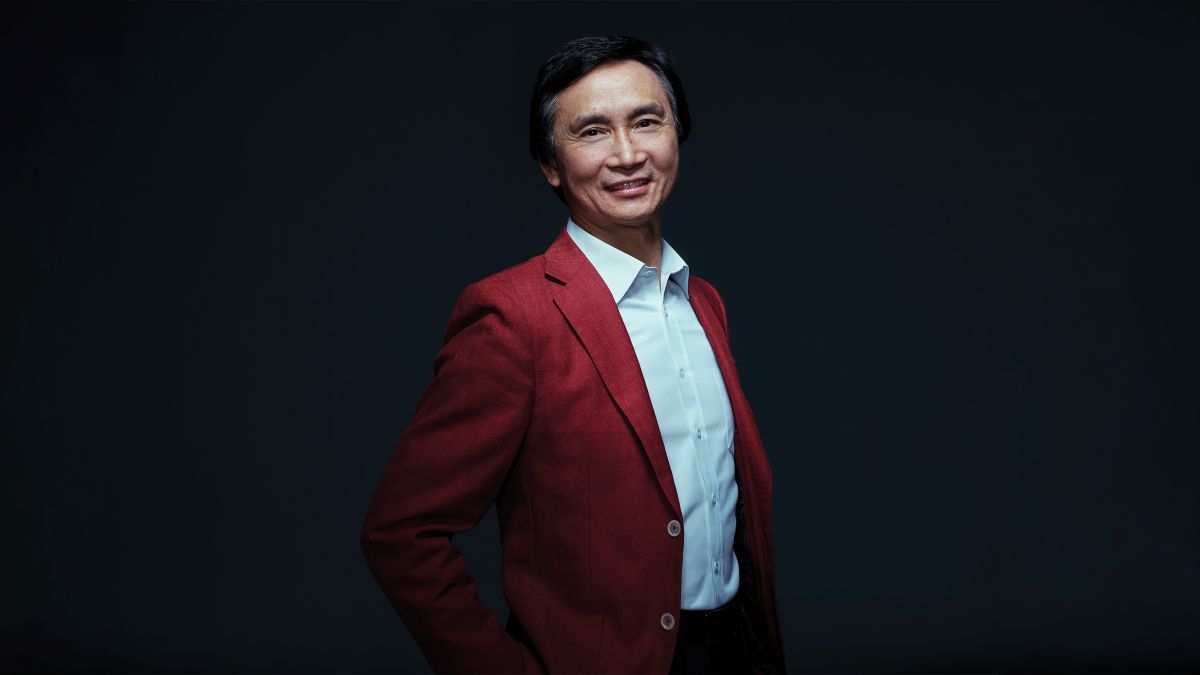
Image: Supplied/Li Cunxin
As a young boy Li Cunxin attached handwritten letters to his kite, asking the gods to take him away so he could “help [his] family”.
His life began in bitter poverty, as a peasant boy in Mao’s China, until a twist of fate saw him plucked from his classroom by the regime to be trained as a ballet dancer, which eventually led to his defection to the United States in 1981.
He captivated readers with his story in the internationally bestselling memoir Mao’s Last Dancer (2003).
Now he’s preparing to release its sequel, The Lucky Son, which explores what came next: raising a family in Australia, serving as Artistic Director of the Queensland Ballet, and reconciling his own cultural identity.
Speaking from Brisbane where he lives with his wife and former dance partner Mary McKendry, Li says he is passionate about multicultural Australia, and that embracing his own cultural diversity has been a strength.
“Looking back, my life has been enriched beyond my imagination by embracing the Western culture and still upholding some of my Chinese values,” he says.
“I think we as human beings need to learn from each other so we can be better human beings as a result.”
Coming to Australia
Li and Mary—a professional dancer originally from Rockhampton, were married in 1987 when they were dancing with the Houston Ballet.
They had the first two of their three children in the United States before moving to Australia in 1995, where Li would go on to be Principal Dancer with the Australian Ballet.
Although he was excited about coming to Australia, Li says he was also apprehensive.
“Before I came to Australia, I kept hearing about the White Australia [Policy] and the prejudice against foreigners and all that,” he says. “But I didn’t find that.”
He says dancing was a cultural bridge that helped him connect with people.
“I was really pleasantly surprised: as an artist, as a dancer, the Australian audience quickly embraced me as one of their own.”
In 2013 he took on the position of Artistic Director with the Queensland Ballet. After his retirement in 2023, the Company described his influence as “visionary”, having “elevated Queensland Ballet to new heights and firmly placed [it] on the world stage”.
Having managed not just to adapt to, but to thrive in a culture so different to the one he was born into, Li’s advice is that cultural diversity is a strength when we embrace it.
“For every culture there are very valuable things for others to experience and to learn and… the more we learn from different cultures the richer life will be.”
‘An exciting multicultural society’ for future generations
Li and Mary raised three children in Australia, and he brought this philosophy to their upbringing.
“Bringing up my children here in the West, I wanted our children to also understand where they came from,” he says.
“[We] still celebrate traditional Chinese holidays such as the Chinese New Year and the Spring Moon festival, just to give that extra meaning.”
Since his retirement, he and Mary now spend the most of their time between Brisbane and the Gold Coast.
With his children grown and his new book on the way, Li says his hopes for the future are that we work to “make society a better place to live, not only for our own generations but for future generations”.
“We can only do that if we come together,” he says.
“If we accept each other’s cultures and we learn from each other’s cultures we can make the [Australia] an exciting multicultural society.”